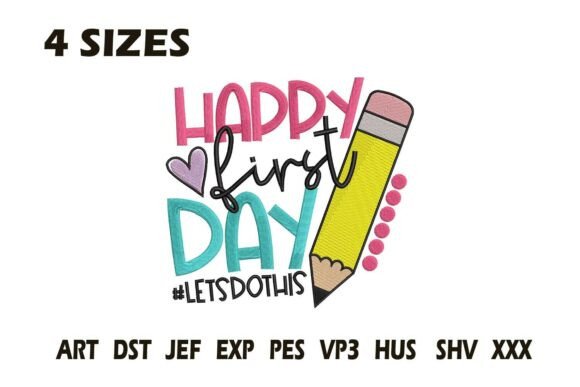
Happy First Day Embroidery Design Review
In my work as an embroidery designer for brands and small businesses, I regularly evaluate new designs not just for their decorative appeal, but for their practical strength in commercial use. Today, I'm reviewing the Happy First Day Embroidery Design from a purely professional perspective: how it holds up when stitched onto merchandise, patches, and branded apparel.
First Impression: Whimsy with Professional Potential
The name and described "playful charm" immediately set a tone. This isn't a corporate, stiff logo. It feels friendly, approachable, and handmade. For a bakery, a creative studio, a children's boutique, or a pet brand, that initial whimsy is a powerful asset. It suggests a business with personality. However, the question for us is whether that playfulness can translate into a crisp, recognizable brand mark when embroidered on a uniform or product label. Based on its description, the design seems positioned to walk that line—it's decorative but structured for machine embroidery, which is key.
Application in Real Small Business Scenarios
Let's move beyond home decor and t-shirts. Imagine the concrete applications.
Embroidered Patches for Branded Merchandise
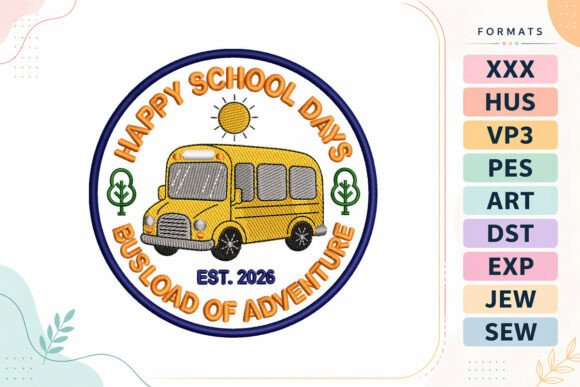
An embroidered patch using this design could be exceptionally versatile. A local café could stitch it onto denim jackets or canvas tote bags as seasonal staff apparel or customer gifts. A florist might use it as an accent on apron pockets. The "First Day" theme, while fitting the Back To School category, also speaks to new beginnings, making it suitable for a startup's launch merch or a studio's opening event. As a patch, it needs to maintain clarity at smaller sizes—this is a crucial test.
Uniform and Workwear Integration
For chest logos or sleeve details on staff uniforms, the design must balance visibility with subtlety. On a café apron or a boutique's work shirt, a well-embroidered Happy First Day design can appear as a warm, branded accent rather than a loud advertisement. It elevates standard custom apparel into something that feels specially crafted, boosting perceived product value.
Product Packaging and Boutique Labels
For handmade shops and Etsy sellers, this digital embroidery file could be used to create unique product tags or labels stitched directly onto fabric packaging. This adds a layer of tactile, handmade product authenticity that buyers engage with deeply. It turns a simple tag into a design asset.
Careful Considerations for Production Success
Every design has its limits. Here’s where a professional must be cautious with the Happy First Day Embroidery Design.
- Size Reduction: For cap fronts or small product packaging accents, any tiny lettering or detailed outlines must survive scaling down. A test run at the intended small patch size is non-negotiable.
- Fabric and Texture: Stitching on curved surfaces like caps, or on textured fabrics like towels (as mentioned), demands proper stabilizer choice. The playful nature might include elements that require higher stitch density, which can be challenging on flexible or textured bases.
- Color and Contrast: On dark uniforms or bags, thread color contrast is paramount. I always advise testing the design in black and white thread first to judge its foundational form separate from color charm.
- Durability: Items like work shirts or tote bags that need frequent washing require a robust embroidery construction. Checking stitch integrity under stress is part of the pre-production process.
Impact on Brand Identity and Customer Perception
Using this design for your small business merch isn't just about decoration; it's a branding decision. A consistently applied, well-executed embroidery on your aprons, tote bag design, and caps builds visual consistency. It moves from being a one-off graphic to a recognizable mark of your business's style. That builds customer trust and aids recognition. The playful, handmade presentation directly communicated by this design can make a business feel more personal and premium, rather than generic and mass-produced. It engages buyers looking for authenticity.
Practical Designer Notes Before You Stitch
Before you run this file for any commercial embroidery project, here is my standard checklist.
- Test on Real Fabric: Do a physical sample on the exact fabric type you'll use for your project—whether it's apron twill, cap mesh, or bag canvas.
- Verify Technical Specs: Confirm the required hoop size and that your machine can handle the file format. The product description hints at machine embroidery, but specifics are vital.
- Create a Printable Mockup: Before investing in bulk stitching, create a digital printable mockup to show your client or team how the finished product will look. Compare it beside your other brand assets for cohesion.
- Inspect Spacing and Density: Look closely at the design's spacing between elements. Tight areas can cause thread buildup, affecting quality on detailed outlines.
- License for Business Use: Crucially, confirm the commercial embroidery licensing terms for this embroidery file before using it on products you sell. Not all designs are cleared for commercial use.
The Final Verdict for Business Use
The Happy First Day Embroidery Design presents a compelling opportunity for businesses aiming to infuse their merchandise with friendly, whimsical character. Its strength lies in its potential to serve as a unifying, handmade-branded accent across patches, uniforms, and product details. Its weakness, like any design, will be revealed in rigorous pre-production testing—particularly regarding scale and application on challenging surfaces. For the bakery, the boutique, the startup studio, it could be the perfect brand identity accent that says "we care about the details." Approach it not as a simple decoration, but as a strategic design asset for your brand's visual story.