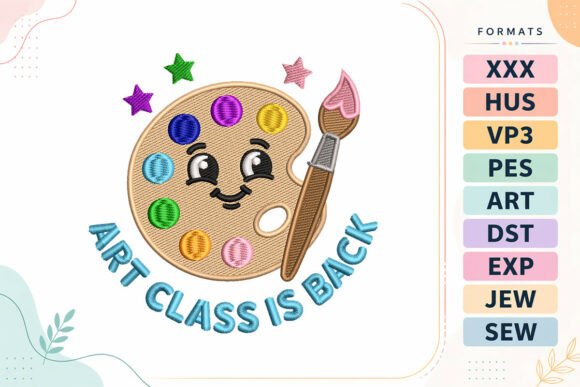
Evaluating the Art Class Back to School Embroidery Design
As an embroidery seller sourcing new designs, I constantly look for files that balance visual appeal, commercial potential, and practical application. When browsing Creative Fabrica embroidery collections, the Art Class Back to School design immediately caught my eye. Its description celebrates creativity and the new school season with a cute paint palette and brush illustration, perfect for teacher shirts and classroom décor. But beyond that, how does it hold up from a seller’s perspective? Let’s walk through a real evaluation.
The Visual Personality and Market Fit
The title Art Class Back to School tells us exactly what this is: a seasonal, theme-driven design. The artwork feels inherently playful, cute, and classic. It’s not overly feminine or minimalist; it has a friendly, approachable charm that resonates with a broad audience. This personality makes it a strong candidate for several product categories.
For Etsy sellers and small shop owners, this design fits neatly into the Back To School niche, but its “art class” theme gives it year-round potential for creative teachers, artists, and students. It feels giftable—a parent buying for a teacher, a student for a friend, or a craft lover for themselves. The professional yet adorable illustration helps a handmade product feel more polished and memorable.
Product Ideas and Commercial Applications
Based on its description, I’m envisioning a whole mini-collection. The obvious start is custom apparel: teacher sweatshirts, student t-shirts, or even aprons for art instructors. But the application is wider. Sweatshirt embroidery with this design would be a staple. A tote bag design for carrying supplies makes perfect sense. For home décor, consider embroidered pillow covers or baby blankets for a nursery with a creative theme.
It’s also excellent for smaller, quicker-turn items. Kitchen towel embroidery could work if the palette colors pop on a linen background. An embroidered patch would be fantastic for backpacks or jackets. For craft fairs, items like caps or personalized gifts with this design could attract teachers and parents browsing for unique, seasonal finds.
This versatility supports multiple business strategies: seasonal collections, boutique merchandise, small batch apparel, and personalized gifts. Having a cohesive design like this allows for strong product photography and social media previews—you can photograph a sweatshirt, tote, and patch together, creating a compelling shop story.
Buyer-Focused Value and Selling Potential
The true test is whether a design helps a product sell. Art Class Back to School adds clear value. Its thematic clarity makes online shoppers instantly understand the product’s purpose. A gift buyer searching for “teacher gift” or “art student present” would recognize it immediately. The cute illustration makes the product feel special and thoughtful, increasing its giftability.
From a photography standpoint, the defined shapes and likely color variety should make items easy to photograph. They’ll stand out against fabric, creating attractive listing thumbnails. For printable mockups, the design should integrate well, allowing you to create digital previews before stitching physical samples.
For commercial embroidery or larger batch production, the design’s appeal to a defined audience—teachers, schools, art enthusiasts—means you could target wholesale or custom orders. It’s a design that tells a story, which is powerful in the handmade market.
Practical Seller Notes and Pre-Production Checks
Before adding any digital embroidery file to your product line, due diligence is key. While the Creative Fabrica description gives us a great overview, specific technical details are crucial for a smooth production.
Always test the design before listing products. Create a sample stitch-out on the fabric you intend to use—perhaps a cotton tee for apparel or canvas for a tote. This reveals the true stitch density, which affects production time and fabric suitability. Heavy density on delicate fabrics can cause puckering, while light density might not look premium on a sweatshirt.
Photograph this sample on real fabric. How do the colors translate? Compare thread color options; the paint palette likely uses multiple hues, so experiment to see if certain color combinations look more vibrant. Crucially, check readability at listing-thumbnail size. On Etsy, a tiny, detailed design can become a blur; ensure the main elements of the palette and brush remain clear when scaled down.
Confirm the required hoop size by checking the Creative Fabrica product page. This determines which items you can stitch it on—a large hoop design might not fit on a cap, while a small one could be perfect for patches. Also, review the recommended stabilizer type to ensure your finished product looks crisp.
Finally, and most importantly, always check the Creative Fabrica licensing before selling finished goods. Understand the terms for commercial use to ensure your craft business operates within the license. The product page will specify the allowed uses for the machine embroidery design.
Making the Final Decision
Evaluating Art Class Back to School, it presents a compelling case. Its playful, thematic artwork has clear applications across apparel, décor, and accessories, making it versatile for an Etsy seller building a collection. It enhances product value by being easily understandable, giftable, and photogenic.
The practical side requires your standard pre-listening checks: a stitch-out test, photography experiment, and license verification. But conceptually, this design aligns with seasonal trends and evergreen creative niches. For sellers looking to offer custom apparel, handmade home decor, or personalized gifts with a charming, school-ready theme, this embroidery file from Creative Fabrica could be a worthwhile addition to your digital toolkit. It’s a design that seems ready to help your products tell a cute, creative story.