A Designer's Review: The Back to School Books Quote Embroidery
When a new embroidery file lands in my library, I don’t just look at the preview—I envision it stitched out, on real fabric, in a real project. The Back to School Books Quote design, with its playful "Launching Into Knowledge" theme, immediately sparks that kind of practical planning. It’s a design that feels less like a generic graphic and more like a complete, ready-to-use product concept.
First Impressions: A Rocket That Feels Like a Gift
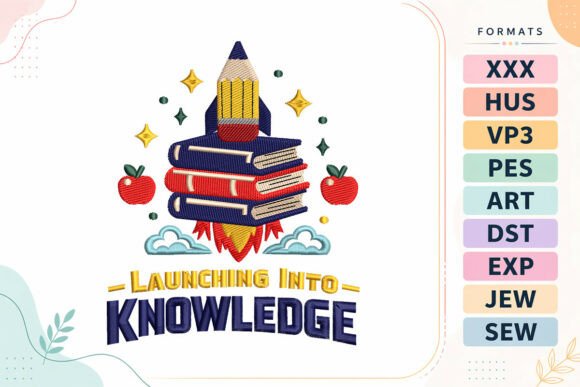
The charm here is in the clever metaphor. A stack of books becoming a rocket, topped with a pencil and flanked by apples and clouds, isn’t just cute; it’s smart. It creates a mood of optimistic excitement, perfect for the season. The layout is central and bold, with enough detail to feel special but not so dense that it becomes a stitching nightmare on textured fabrics. Its visual personality is friendly and slightly nostalgic, making it ideal for projects meant to feel handmade and personal, rather than mass-produced.
Where This Design Naturally Belongs
I can already picture this on a canvas tote bag for a teacher, a cozy sweatshirt for a student, or a crisp apron for a classroom volunteer. For small business owners and Etsy sellers, it’s a versatile asset. Imagine it as a framed embroidered patch for a nursery, or centered on a pillow cover for a child’s room. As a holiday gift or a boutique product for back-to-school, it has immediate recognition and giftability. The design’s completeness—it’s a scene, not just an icon—adds perceived value, which is crucial for craft business items.
The Real-World Stitching Scenario
Let’s walk through a typical use case. Say I’m preparing a custom embroidered baby item, like a onesie or a small blanket for a newborn whose parents are teachers. My first concern is always stitch density and clarity on potentially stretchy or thin fabric. The rocket’s outline and the book details will likely rely on satin stitches and clean fill stitches. On a dark fabric background, I’d need to pay close attention to thread color contrast to keep the apples and pencil topper vibrant.
For a more robust product, like a sweatshirt or a kitchen towel, the design’s size becomes key. It’s not a tiny emblem; it’s a statement. That means hoop size matters. On curved surfaces like caps, I’d be cautious—the design’s wider shape might need careful positioning to avoid distortion. This is where testing on scrap fabric first is non-negotiable.
Projects Where This Design Elevates Your Work
- Custom Apparel: A well-stitched version on a polo shirt or t-shirt instantly looks professional and thoughtful.
- Handmade Home Decor: On a pillow cover or tea towel, it becomes a decorative accent that tells a story.
- Personalized Gifts: For a wedding gift for educators or a holiday present, it feels uniquely tailored.
- Small Shop Merchandise: In a craft fair booth, this on a tote bag draws eyes because it’s thematic and well-executed.
Caution Zones: Where to Be Extra Mindful
Every design has its sweet spots and its tricky applications. For the Back to School Books Quote, I’d be careful with very small hoop sizes that might compress the charming details, especially the smaller clouds and the lettering. Textured fabrics like certain linens could obscure the fine lines of the book spines. Also, on layered garments with seams or on products that need frequent washing, the integrity of those detailed areas must be ensured with proper stabilizer and durable thread.
The design’s strength is its illustrative quality, but that means tiny lettering or densely packed stitch areas could become muddy if not stitched with precision. For commercial embroidery projects where speed is a factor, a test run to review stitch density is a must.
How This Design Impacts Your Product's Appeal
From a business perspective, using a design like this wisely builds customer trust. It shows you’ve chosen an asset with visual clarity and a strong theme. The finished product looks cohesive and intentional, aiding brand consistency for makers who specialize in nostalgic or educational items. For the buyer, it’s engaging—it sparks a connection. That directly enhances the handmade presentation and the likelihood of a sale or a delighted gift recipient.
Practical Notes for the Embroidery Designer
Before I commit this to a client project or my own shop inventory, my checklist is straightforward but vital.
- Always stitch a sample on a scrap of the target fabric, checking both light and dark backgrounds.
- Review the stitch file closely for any overly dense fill areas that might puckering on thin fabric.
- Confirm the hoop size required to keep all elements crisp—don’t assume.
- Inspect small details in the preview: are the apple stems clear? Does the rocket base have clean outlines?
- Consider creating a simple black and white printable mockup to see how it works as a digital product preview.
- Use the appropriate stabilizer for the fabric; this design has a mix of elements that need good support.
- Crucially, verify the licensing terms of the embroidery file. Can it be used for personal projects, commercial items, or as part of digital product bundles? Never assume.
This design, Back to School Books Quote, is a tool. Its real value isn’t in the digital file itself, but in how it transforms on fabric. It’s a design that, when stitched well, tells your customer that you understand both craft and context. It turns a simple embroidery project into a meaningful finished product. That’s the judgment I make before any hoop is clamped: will this design work with me, and for my audience? In this case, with a bit of practical foresight, it absolutely will.