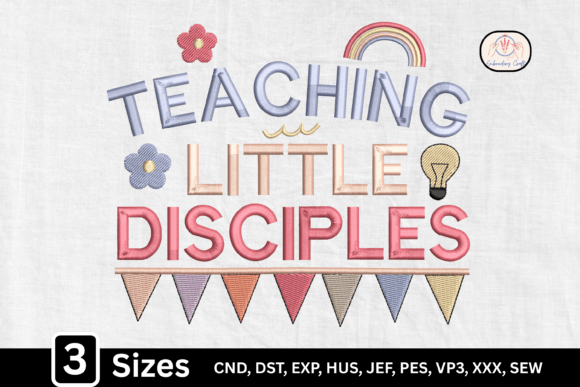
A Designer's Review of the Teaching Little Disciples Embroidery Design
As an embroidery designer working with a personalized gift shop, my process always involves putting a new design file through its paces before it goes into production. Today, I’m reviewing the “Teaching Little Disciples” design, imagining it as a finished, stitched product on real customer orders. My goal is to see if this Christian-themed artwork holds up not just as a digital file, but as a tangible, meaningful gift.
First Impression: Sweet Charm with a Handmade Feel
Opening the “Teaching Little Disciples” design in my software, the immediate mood is one of sweet, classic charm. It feels inherently handmade and gentle, perfect for projects that carry emotional weight. The design isn’t overly ornate or modern; it leans into a playful, heartfelt aesthetic. This emotional appeal is its strongest asset—it visually communicates care, faith, and nurturing without being overly bold. For gift-giving, that first visual connection is crucial, and this design establishes it instantly.
Versatile Applications for Personalized Gift Markets
The true test of any embroidery file is its versatility across different products. For “Teaching Little Disciples,” I envision a wide range of applications that would resonate with various customers.
For baby embroidery and nursery decor, this design would be beautiful on a blanket, a wall hanging, or the corner of a special pillow cover. It speaks directly to parents seeking faith-based items for their child’s space. As a wedding gift, especially for a couple starting a family, stitching this onto a kitchen towel, a custom apron, or a keepsake pillow cover adds a layer of personalized blessing to the present.
For everyday personalized gifts, think of a tote bag for a Sunday school teacher or a family keepsake like a monogrammed towel set. The “School” category hint makes it ideal for teacher appreciation items or gifts for a child’s first day at a Christian school. For Etsy sellers and craft fair vendors, this design offers a ready-made product for customers looking for that specific, heartfelt niche. Creating a printable mockup or photo of the design on a finished product, like a pillow or apron, would significantly boost buyer engagement in an online listing.
Planning for Specific Product Challenges
While versatile, successful application requires careful planning. Some areas of this design demand attention. If the artwork includes small lettering or delicate details, they must be tested on the intended fabric. Stitching on textured fabric or thick towels requires robust stabilizer to prevent distortion. For stretchy baby clothes, a combination of stabilizer and possibly adjusting hoop technique is key to maintain integrity.
Applying the design on curved surfaces, like a tote bag side, or on dark fabrics requires forethought. On dark fabrics, thread color contrast must be checked—a light or bright palette might be necessary. Furthermore, for products destined for frequent washing, like towels or baby blankets, testing stitch density and durability on a scrap piece of the actual fabric is a non-negotiable step to ensure the gift lasts.
Enhancing Giftability and Perceived Value
From a business perspective, “Teaching Little Disciples” directly enhances giftability. When a customer sees this design embroidered on a high-quality blank, like a soft blanket or linen pillow, the perceived value jumps. It transforms a simple item into a cherished, custom embroidery piece. This builds customer trust—they see the item as a thoughtful, handmade product rather than a generic commodity.
The emotional connection fostered by the design’s theme translates into a stronger handmade quality perception. In product photography, a well-stitched version of this design, with clean stitches and appropriate thread colors, tells a story of care and craftsmanship, which is exactly what buyers in this niche are seeking.
Practical Embroidery Notes Before Production
Before running this machine embroidery design on real customer orders, my standard checklist applies. First, always stitch a test sample on a scrap of the target fabric. This reveals how the stitch density interacts with the fabric texture and checks the clarity of all small details after stitching.
Confirm the required hoop size by reviewing the design dimensions in your software—don’t assume. Use the proper stabilizer for the project; a towel needs a different approach than a baby knit fabric. Compare how the design looks in light and dark fabric mockups in your software to plan thread choices. Finally, a critical step for any small shop product: confirm the commercial embroidery licensing terms for this digital embroidery file before selling finished products. The provided formats—DST, PES, EXP, JEF, VP3, HUS, XXX—indicate wide machine compatibility, which is excellent, but the license for commercial use must be clear.
Who is the Ideal Customer for This Finished Product?
Based on my review, the customer attracted to a product featuring “Teaching Little Disciples” is looking for meaning. They might be a grandparent wanting a baptism or baby dedication gift, a friend celebrating a wedding with a hope for family, a teacher seeking a personal gift for a student, or a parent decorating a nursery. They value the fusion of faith, personalization, and handmade quality. For the gift shop owner or Etsy seller, offering this design on well-chosen blanks—like premium blankets, elegant pillow covers, or practical kitchen linens—meets that need perfectly, creating a finished personalized gift that feels both special and sincere.
In summary, the “Teaching Little Disciples” embroidery design presents a strong opportunity for personalized Christian gift products. Its charm and emotional core are its driving forces. Success lies in meticulous preparation—testing, stabilizing, and licensing—to ensure that when it leaves your shop as a baby blanket, wedding keepsake, or custom tote bag, it carries the quality and heart the design promises.